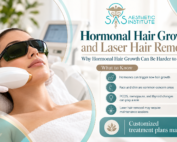
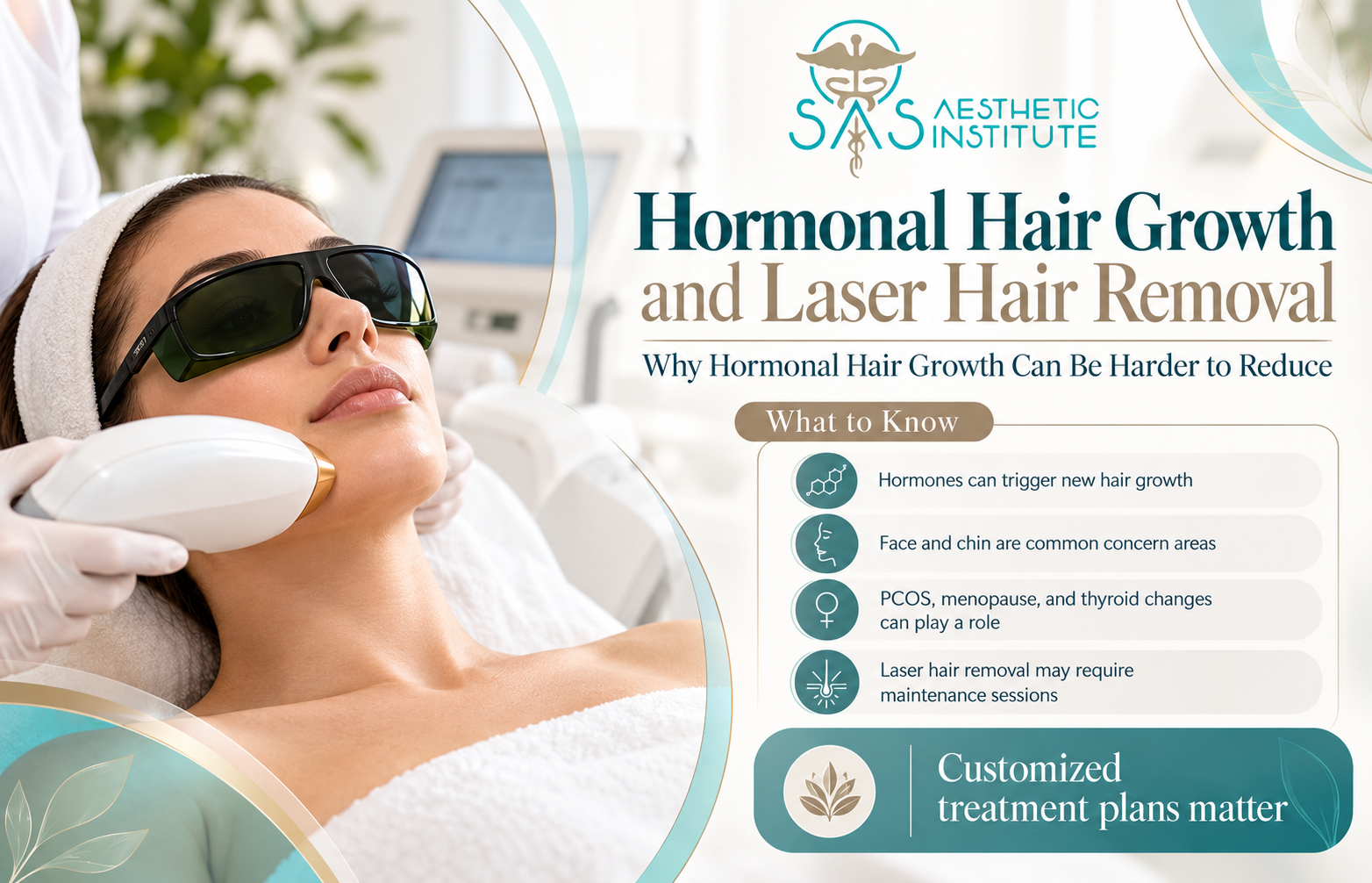
Unwanted hair does not always behave the same way from one area of the body to another.
Someone may notice that leg or underarm hair responds predictably to hair removal, while facial hair along the chin, jawline or neck seems much more persistent.
It may grow back quickly.
It may become coarser over time.
New hairs may appear in areas that previously had very little growth.
When that happens, hormones may be part of the reason.
Hormones can influence how follicles behave, how coarse the hair becomes and whether previously fine hairs become more noticeable.
That does not mean every person with chin or facial hair has a hormonal disorder.
But it does mean that unwanted hair can sometimes involve more than simply choosing a better razor.
At SAS Aesthetic Institute in Mokena, Dr. Michael Romberg, MD, considers hair location, hair characteristics, skin type, changes in growth pattern, medical history and individual goals before recommending laser hair removal.
How Do Hormones Affect Hair Growth?
Hormones help regulate hair growth throughout the body.
One important group is androgens.
Androgens are present in both men and women and can influence certain hair follicles.
When follicles are sensitive to androgen activity, hairs may become:
- Darker
- Thicker
- Coarser
- More noticeable
- Faster growing
This can be especially noticeable in areas such as:
- Chin
- Jawline
- Upper lip
- Neck
- Chest
- Abdomen
The effect varies significantly from one person to another.
Does Hormonal Hair Growth Mean Your Hormones Are Abnormal?
Not necessarily.
This is an important distinction.
A person may have normal hormone levels while certain hair follicles are particularly sensitive to those hormones.
In other cases, changes in hormone levels can contribute to a noticeable change in hair growth.
That is why unwanted facial hair alone cannot tell us whether someone has a hormonal problem.
The pattern and other symptoms matter.
What Does Hormonal Facial Hair Look Like?
There is no single appearance that proves hair growth is hormonal.
However, some patterns may raise the possibility of hormonal influence.
These can include:
- Coarse chin hairs
- Dark jawline hair
- New neck hair
- Increasing upper-lip hair
- Hair becoming thicker over time
- New hairs appearing where only fine hair existed before
- Hair growth changing during adulthood
- Growth occurring alongside other hormonal symptoms
One or two occasional facial hairs are extremely common and do not automatically indicate a medical problem.
The change over time can be more informative than the presence of one hair.
Why Does Chin Hair Keep Coming Back?
Because removing the visible hair does not stop the follicle from producing another one.
If you:
- Shave
- Tweeze
- Wax
- Thread
the hair can eventually return as long as the follicle remains capable of producing it.
Hormonal influence may also continue stimulating the follicle.
That is one reason chin hair can feel especially persistent.
You remove it.
It grows back.
You remove it again.
And the cycle continues.
Why Does Facial Hair Sometimes Become Coarser With Age?
Hormonal balance changes throughout life.
Hair follicles can respond to these changes.
A woman who had very little noticeable chin hair in her 20s may begin seeing more coarse hairs later in adulthood.
This may occur during periods such as:
- After pregnancy
- After stopping hormonal contraception
- Perimenopause
- Menopause
- Other hormonal changes
Not every change is abnormal.
But sudden or significant changes deserve more attention than slow, minor changes over many years.
Can Perimenopause Cause More Facial Hair?
It can.
During perimenopause, reproductive hormone patterns change.
As the balance between different hormones shifts, some women notice:
- New chin hairs
- Coarser facial hair
- Increased jawline hair
- Changes in scalp hair
- Changes in acne
The combination of adult acne and new facial hair can be especially frustrating.
Hair reduction can address the visible hair, while the broader medical context may still need to be considered separately.
Can Menopause Cause Chin Hair?
Some women notice more coarse facial hair during or after menopause.
This does not necessarily mean testosterone levels suddenly became very high.
The relative balance between hormones changes with age, and certain follicles may become more responsive to androgen influence.
The result can be more visible hair on areas such as the:
- Chin
- Jaw
- Upper lip
For many patients, this becomes a long-term grooming concern.
Can PCOS Cause Facial Hair?
Polycystic ovary syndrome, often called PCOS, can be associated with increased androgen activity and unwanted facial or body hair.
However:
having chin hair does not mean someone has PCOS.
Hair growth becomes more meaningful medically when it occurs alongside other changes such as:
- Irregular menstrual cycles
- Significant acne
- New coarse facial or body hair
- Changes in scalp hair
- Other reproductive or hormonal symptoms
Those patterns may deserve medical evaluation beyond simply removing the hair.
Can Hormonal Birth Control Change Hair Growth?
It can.
Hormonal contraception can influence androgen-related activity in some patients.
Starting, stopping or changing hormonal contraception may sometimes coincide with changes in:
- Acne
- Oil production
- Facial hair
- Body hair
If unwanted hair changes significantly after a medication change, that timing can be useful information during a medical evaluation.
Can Pregnancy Change Hair Growth?
Yes.
Pregnancy involves major hormonal changes.
Some people notice changes in:
- Hair thickness
- Growth rate
- Facial hair
- Body hair
- Scalp hair
Hair patterns may change again after pregnancy.
Treatment decisions during pregnancy require additional consideration, so pregnancy status should always be discussed before elective laser treatment.
Why Is Hormonal Hair Often Harder to Manage With Shaving?
Shaving removes only the part of the hair above the skin.
It does nothing to reduce hormonal stimulation of the follicle.
If a follicle continues producing a coarse dark hair, that hair will keep returning.
The result can become a repetitive cycle:
shave → stubble → shave → irritation → regrowth
Facial hair can make this especially frustrating because even a small amount of stubble may be noticeable.
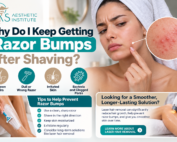
Can Hormonal Facial Hair Cause Razor Bumps?
Yes.
Coarse or curly hormonal-pattern hair can contribute to:
- Ingrown hairs
- Razor bumps
- Redness
- Dark marks
- Frequent shaving irritation
If the hair needs to be removed every day or every few days, the skin may experience repeated friction.
For patients dealing with this cycle, read Why Do I Keep Getting Razor Bumps After Shaving?.
Why Is Tweezing Hormonal Chin Hair So Frustrating?
Tweezing removes the entire visible hair from the follicle.
The result can last longer than shaving.
But the follicle can still produce another hair.
If several follicles are involved, the patient may find themselves checking the chin every day for new growth.
Tweezing can also contribute to:
- Irritation
- Inflammation
- Ingrown hairs
- Dark marks
especially when the same area is repeatedly manipulated.
Can Waxing Permanently Stop Hormonal Hair?
No.
Waxing removes hair from the follicle temporarily.
It does not permanently stop hormonal signals affecting that follicle.
Hair eventually grows again.
Repeated waxing can provide longer intervals between hair-removal sessions than shaving, but it remains a temporary method.
How Is Laser Hair Removal Different?
Laser hair removal is designed to reduce future hair production from treated follicles.
Diode laser technology delivers controlled energy that is absorbed by pigment within the hair.
That energy is directed toward structures involved in future hair growth.
The goal is not simply to remove the hair visible today.
It is to progressively reduce the amount of hair the treated follicles produce over time.
Learn more about Laser Hair Removal in Mokena.
Can Laser Hair Removal Work on Hormonal Hair?
Yes, when the hair has characteristics that make it an appropriate laser target.
The important distinction is:
laser hair removal treats the hair follicle.
It does not change hormone levels inside the body.
If a dark, coarse hormonal-pattern hair contains enough pigment, it may respond to laser treatment.
But ongoing hormonal activity may continue influencing other follicles over time.
That can make hormonally influenced areas behave differently from areas with more stable hair growth.
Does Laser Hair Removal Fix the Hormonal Cause?
No.
Laser hair removal should not be presented as a treatment that “balances hormones.”
Its job is different.
Laser treatment targets appropriate pigmented hairs in the skin.
If a hormonal condition is contributing to new hair growth, that underlying issue exists separately from the laser treatment.
Both concerns can be addressed appropriately without confusing them.
Why Can New Hair Appear After Laser Hair Removal?
Not every visible hair in the future necessarily represents the exact same follicle returning unchanged.
Hormonal changes can activate follicles that previously produced only:
- Fine hair
- Light hair
- Barely visible hair
Those follicles may later produce darker or coarser hair.
This can make it seem like “all the laser hair grew back” when the actual hair pattern has changed over time.
This distinction is particularly important for hormonally influenced facial areas.
Why Might Facial Hair Need More Maintenance Than Leg Hair?
Hair patterns differ by body area.
Leg hair may be relatively stable.
Facial hair can be more responsive to hormonal changes.
That means a patient may achieve excellent long-term reduction on the legs while occasionally noticing new or returning facial hairs later.
The difference does not necessarily mean the treatments failed.
It reflects the biology of the follicles and ongoing hormonal influence.
Which Areas Are Most Affected by Hormonal Hair Growth?
In women, androgen-sensitive hair growth may be most noticeable on areas such as:
- Upper lip
- Chin
- Jawline
- Neck
- Chest
- Lower abdomen
The pattern varies.
Some patients primarily notice chin hair.
Others experience broader facial growth.
Can Hormonal Hair Growth Affect Men Too?
Yes.
Androgens are a major driver of male facial and body hair.
Men commonly have coarse hair on areas such as:
- Beard
- Neck
- Chest
- Abdomen
- Back
- Shoulders
Laser treatment may be used when the goal is to reduce excessive density, improve beard-line definition or reduce unwanted body hair.
The goal does not always have to be complete hair removal.
Does Laser Work Better on Coarse Hormonal Hair?
Coarse, dark hair can provide a strong laser target because it contains more pigment.
However, individual response still depends on:
- Hair pigment
- Hair thickness
- Skin tone
- Growth cycle
- Treatment area
- Hormonal influences
- Treatment settings
Coarseness alone does not guarantee a particular result.
Why Doesn’t Laser Work Well on Gray Hormonal Chin Hair?
Laser hair removal depends on pigment.
Gray and white hairs contain very little or no melanin.
Without enough pigment, there is less target available to absorb the laser energy.
This is why a patient may have a mixture of:
- Dark chin hairs that respond well
- Gray chin hairs that respond poorly
in the same treatment area.
The laser does not simply detect “hair.”
It relies on pigment within that hair.
What About Blonde Facial Hair?
Very light blonde hair can also provide less pigment for the laser to target.
The darker and more pigmented the hair, the clearer the target generally becomes.
This is one reason consultation is important before starting a treatment series.
The patient’s expectations should match the actual hair characteristics.
Does Skin Tone Matter for Hormonal Facial Hair Treatment?
Yes.
Melanin is present in the skin as well as in the hair.
Laser settings should therefore be selected based on both.
At SAS Aesthetic Institute, diode laser hair removal is individualized according to:
- Skin characteristics
- Hair color
- Hair thickness
- Treatment area
- Treatment goals
The same settings should not simply be applied to everyone.
Learn more about the Diode Laser Hair Removal Technology available at SAS.
Why Does Hormonal Hair Still Require Multiple Laser Sessions?
Hormonal hair follows hair-growth cycles just like other hair.
Not every follicle is in the same stage at the same time.
That is why laser hair removal is performed as a series.
Different follicles become appropriate targets at different times.
Hormonal influence may also mean the long-term pattern continues evolving during and after treatment.
For a detailed explanation, read How Many Laser Hair Removal Sessions Do You Actually Need?.
Will Hormonal Facial Hair Need Maintenance Treatments?
It may.
Maintenance needs vary from patient to patient.
Hormonally influenced areas may be more likely to develop new or recurrent visible hairs over time.
This can occur because:
- Hormonal activity continues
- New follicles become active
- Previously fine hairs become coarse
- Life-stage changes affect hair growth
Maintenance does not automatically mean the original treatment failed.
It may simply be part of managing a changing biological process.
Can Laser Hair Removal Prevent New Hormonal Hairs From Ever Developing?
No.
A laser can treat appropriate hairs that are present and targetable during treatment.
It cannot guarantee that hormones will never stimulate other follicles in the future.
This is why realistic expectations matter.
The goal is long-term reduction, not a promise that no hair will ever appear again anywhere in the treatment area.
Is Hormonal Hair Growth the Same as Hirsutism?
Not necessarily.
Hirsutism refers to a pattern of coarse, dark hair growth in women in areas where terminal hair growth is more typically influenced by androgens.
That can include areas such as:
- Chin
- Upper lip
- Chest
- Abdomen
- Back
But having several unwanted hairs does not automatically mean someone has hirsutism.
A broader evaluation may be appropriate when hair growth becomes extensive or changes suddenly.
When Should New Facial Hair Be Medically Evaluated?
It may be worth discussing new hair growth with a physician when it:
- Appears suddenly
- Increases quickly
- Becomes much coarser
- Occurs with irregular menstrual cycles
- Appears with new severe acne
- Occurs with significant scalp hair changes
- Is accompanied by other hormonal symptoms
The goal is not to make every patient with chin hair worry about a medical condition.
It is to recognize when the hair pattern is changing enough that the underlying cause deserves attention.
Can You Still Get Laser Hair Removal While Investigating Hormonal Hair Growth?
Potentially, depending on the individual situation.
Removing unwanted hair and determining why hair growth changed are related but separate questions.
A patient may want to reduce existing coarse facial hair while also discussing possible hormonal contributors with a physician.
The treatment plan should reflect the full picture.
Does Shaving Make Hormonal Facial Hair Worse?
No.
Shaving does not cause the follicle to become hormonally stimulated.
It also does not increase the actual diameter of the follicle.
Hair can feel coarser after shaving because the razor creates a blunt edge.
That stubble can make hormonal facial hair seem thicker even though shaving itself did not change the underlying hair.
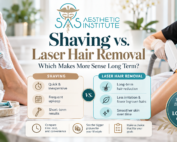
Read Shaving vs. Laser Hair Removal for a deeper comparison.
Can Laser Hair Removal Help With Dark Marks From Hormonal Facial Hair?
The primary purpose of laser hair removal is reducing unwanted hair.
Dark marks from:
- Ingrown hairs
- Picking
- Razor bumps
- Repeated inflammation
are separate skin concerns.
However, reducing recurring hair growth may help reduce the cycle that continues creating new bumps and new marks.
A complete plan should distinguish between the hair problem and the skin changes left behind by previous irritation.
Should I Stop Tweezing Before Laser Hair Removal?
Typically, hair should remain present within the follicle so the laser has a target.
Tweezing and waxing remove the hair from the follicle.
Shaving cuts hair at the surface while leaving the underlying hair target available.
Preparation instructions should always be followed based on the specific treatment plan provided by SAS Aesthetic Institute.
Can I Shave Hormonal Facial Hair Between Laser Sessions?
Shaving is commonly used between treatments when necessary and when the skin is not irritated.
As treatment progresses, patients may notice:
- Less hair
- Slower apparent regrowth
- Finer remaining hair
- Less frequent shaving
The amount of change varies.
How Do You Know If Hormonal Hair Is a Good Laser Target?
Several factors matter.
Hair Color
Darker pigment generally provides a stronger target.
Hair Thickness
Coarser hairs often contain more pigment than fine hairs.
Skin Tone
Treatment settings must account for pigment in the surrounding skin.
Hair Location
Certain areas may behave differently due to hormonal sensitivity.
Growth Pattern
New or rapidly changing hair may deserve broader evaluation.
Expectations
Patients should understand that hormonally responsive areas may require future maintenance.
Frequently Asked Questions About Hormonal Hair Growth
Why am I suddenly growing chin hair?
Hormonal changes, aging, genetics and medication changes can influence facial hair. A significant or sudden change may deserve medical evaluation.
Does chin hair mean I have high testosterone?
Not necessarily. Hair follicles can respond strongly to normal androgen levels.
Does chin hair mean I have PCOS?
No. Facial hair can occur for many reasons. PCOS becomes more relevant when hair growth occurs with other symptoms such as irregular menstrual cycles or significant acne.
Can menopause cause chin hair?
Hormonal changes during and after menopause can make facial hair more noticeable in some women.
Can perimenopause cause facial hair?
Yes. Changing hormone patterns during perimenopause may affect facial hair growth.
Can laser hair removal treat hormonal chin hair?
Dark, pigmented hormonal-pattern hairs may respond to laser treatment when the skin and hair characteristics are appropriate.
Does laser hair removal balance hormones?
No. Laser hair removal acts on targeted hair follicles. It does not change hormone levels.
Will hormonal hair come back after laser?
Some new or recurrent hair may appear over time because hormonal changes can continue influencing follicles.
Why did my legs respond better than my face?
Facial hair can be more hormonally responsive than leg hair, which can affect long-term growth patterns and maintenance needs.
Does laser work on gray chin hairs?
Gray and white hairs contain little or no pigment, making them poor laser targets.
Does laser work on blonde facial hair?
Very light blonde hair may contain too little pigment to respond effectively.
Should I shave or tweeze between laser sessions?
Shaving is typically preferred because it leaves the hair structure within the follicle available for the laser. Tweezing removes it.
How many treatments will hormonal facial hair need?
There is no universal number. Treatment area, hair characteristics, growth cycle, hormonal factors and individual response all influence the plan.
Can men have hormonally influenced hair growth?
Yes. Androgens strongly influence male facial and body hair patterns.
Is laser hair removal permanent for hormonal hair?
Laser hair removal is best described as long-term hair reduction. Hormonal changes may contribute to future growth or maintenance needs.
Hormonal Hair Growth Requires Realistic Expectations
When unwanted hair is hormonally influenced, the visible hair and the biological reason for its growth are two different things.
Laser hair removal can target suitable pigmented hairs.
It does not change hormone levels.
That distinction matters because a patient may achieve significant reduction while still developing occasional new hairs as hormonal patterns evolve.
The goal should not be an unrealistic promise that every follicle will remain inactive forever.
The goal is to:
- Reduce unwanted hair
- Reduce repetitive grooming
- Reduce frequent shaving
- Decrease the number of coarse hairs in appropriate areas
- Create a practical long-term maintenance plan
At SAS Aesthetic Institute, Dr. Michael Romberg, MD, evaluates the patient’s skin, hair characteristics, treatment area and growth pattern before recommending treatment.
SAS Aesthetic Institute
19657 South La Grange Road, Mokena, IL 60448
(708) 476-8205

Michael S. Romberg, MD
Dr. Michael S. Romberg is a Board Certified General Surgeon with more than 32 years of experience. His medical expertise includes general and oncologic surgery, wound care, burn care, lymphedema care, and Hyperbaric Oxygen Therapy. He is also an experienced national and international speaker for healthcare professionals and patients.