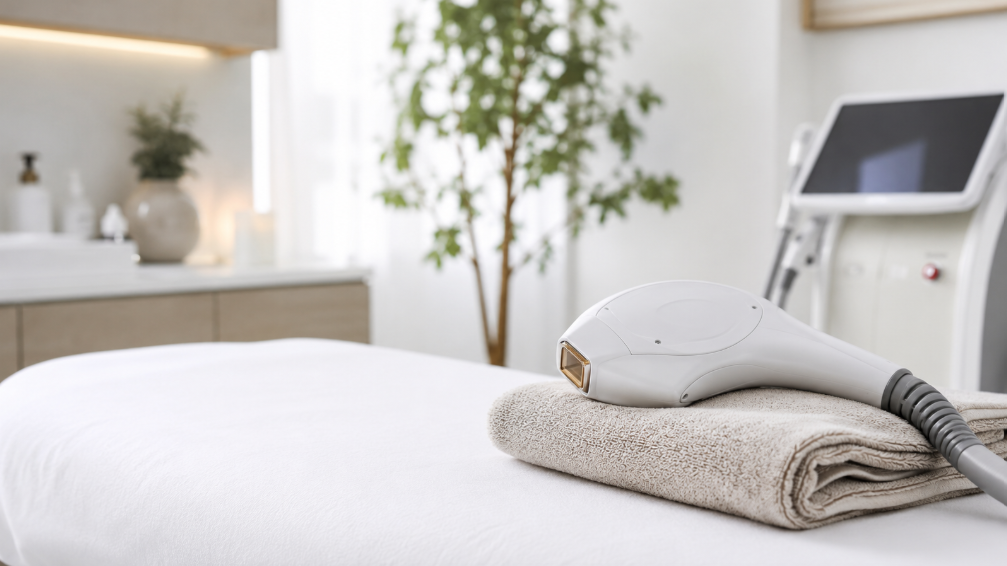
Laser hair removal is a non-invasive cosmetic treatment that uses focused light energy to reduce unwanted hair growth. A handheld device delivers pulses of light into the skin, where the energy is absorbed by the pigment inside each hair follicle and converted to heat. That heat damages the follicle’s ability to produce new hair.
It’s important to be precise about the outcome, because this is where most marketing gets sloppy. The medically accurate term is permanent hair reduction, not permanent hair removal.
What is laser hair removal?
Shaving lasts a day. Waxing lasts a few weeks. Both are chores you never actually finish. Laser hair removal is different in kind, not just degree — instead of cutting or pulling hair, it targets the follicle that produces it, so the hair that comes back grows in finer, sparser, and slower until much of it stops coming back at all.
That difference is why the treatment has become one of the most requested services in aesthetic medicine. This guide answers all of it in one place. It’s written from the perspective of a physician-led practice — at SAS Aesthetic Institute, treatments are directed by Michael S. Romberg, MD, FACS
How does laser hair removal actually work?
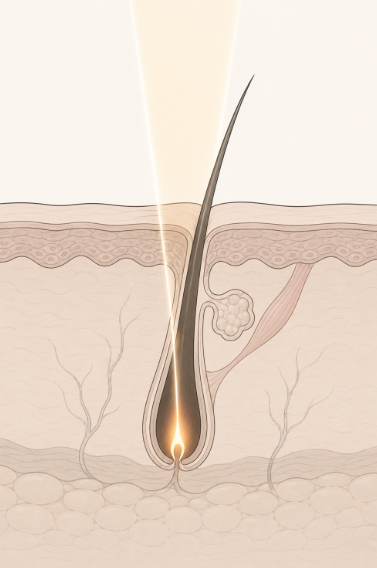
The underlying principle is called selective photothermolysis, which is a technical way of saying the laser is tuned to damage one thing while leaving everything around it alone.
Here’s the sequence. The laser emits light at a specific wavelength. Melanin — the pigment that gives hair and skin their color — absorbs that light. Because the pigment concentrated in a hair follicle absorbs the energy far more readily than the surrounding tissue does, the follicle heats up while the skin around it stays comparatively cool. That localized heat disrupts the follicle’s growth structures.
A Diode laser is well suited to this job because its wavelength penetrates to the depth where follicles live and is absorbed strongly by hair pigment relative to skin pigment. Paired with contact cooling, which chills the skin surface as each pulse fires, it allows for effective treatment with a good comfort profile across a wide range of skin tones.
This mechanism also explains the treatment’s main limitation. If there’s little or no pigment in the hair — as with white, gray, or very light blonde hair — there’s nothing for the laser to target effectively. Hair color, not just skin color, determines who responds well.
Why you need more than one session
This is the single most misunderstood part of the treatment, and it comes down to biology rather than technique.
Your hair doesn’t all grow at the same time. Every follicle cycles independently through three phases: an active growth phase, a transitional phase, and a resting phase. The laser can only meaningfully disable a follicle during the active growth phase, when the hair shaft is still connected to the structures that feed it. At any given moment, only a portion of the hair in any area is in that phase.
So a single session treats the follicles that happen to be active that day. The ones that were resting will enter their growth phase weeks later — which is exactly when your next session is scheduled. Treating in a series, spaced out to match the growth cycle, is what allows you to catch each follicle at the moment it’s vulnerable.
How many sessions that takes depends on the body area, your hair’s thickness and color, and hormonal factors. We cover the full timeline, including typical spacing between appointments and when maintenance comes into play, in our guide to how many laser hair removal sessions you actually need.
Is laser hair removal permanent?
The honest answer: it produces permanent reduction, and for most people the practical result is close enough to permanence that they stop thinking about the area entirely.
Follicles that are successfully disabled during a treatment series don’t regenerate. That’s the permanent part. What can happen over the following years is that dormant follicles become active — often triggered by hormonal shifts from pregnancy, menopause, thyroid changes, or certain medications — and produce new hair that wasn’t there during your original series. This isn’t treatment failure. It’s new growth from follicles that were never treated in the first place.
That’s why a well-designed plan includes the possibility of a maintenance session once or twice a year for some patients, and none at all for others. Anyone promising you a single permanent fix with no follow-up is overselling.
Which areas can be treated with Laser Hair Removal?

Nearly any area where unwanted hair grows, for both men and women. The most commonly requested at our Mokena practice include:
- Face — upper lip, chin, sideburns, and jawline
- Underarms — one of the fastest areas to treat and among the most popular
- Legs and thighs — larger surface area, so longer sessions
- Arms
- Chest and back — particularly requested by male patients
- Bikini and Brazilian

Small areas like the upper lip or underarms often take just a few minutes. Most treatment areas are completed in under 30 minutes. The eye area is the notable exception — laser hair removal is not performed on or near the eyelids or brows for safety reasons.
Who is a good candidate For Laser Hair Removal?
Traditionally, the ideal candidate was described as someone with light skin and dark, coarse hair, because that combination gives the laser the clearest target. Modern Diode systems have widened that window considerably, and treatment can be performed safely across a broad range of skin tones when the settings are properly calibrated to the individual.
That calibration is the entire ballgame. Delivering too much energy to skin with more melanin risks pigment changes or burns, which is why parameters must be matched to your specific skin type rather than pulled from a default preset. It’s also the strongest argument for choosing a physician-supervised practice over a walk-in chain.
The people who tend not to be good candidates are those with white, gray, or very light blonde hair, since there isn’t enough pigment for the laser to act on. Pregnancy, certain photosensitizing medications, active skin infections in the treatment area, and a recent tan are all reasons to postpone or reconsider. We go deeper on skin tones, hair types, and disqualifying factors in who is a good candidate for laser hair removal.
Does Laser Hair Removal hurt, and is it safe?
Most people describe the sensation as a quick snap against the skin, similar to a rubber band, followed immediately by the cooling of the device head. It’s a real sensation but a brief one, and the overwhelming consensus among patients who’ve also waxed is that laser is the more comfortable of the two.
Comfort varies by area. Bony regions and areas with thinner skin — the upper lip, bikini line, shins — register more than fleshier ones like the thighs or arms. Sensitivity also fluctuates with your menstrual cycle, so timing appointments away from the days before your period can make a noticeable difference.
On safety: the technology is FDA-cleared and has a long clinical track record. Typical after-effects are mild redness and slight swelling around the follicles, both usually resolving within a day. Serious complications are uncommon and are overwhelmingly associated with improper settings or untrained operators — which is a reason to scrutinize who is treating you, not to avoid the treatment.
What to expect before, during, and after Laser Hair Removal
Before
You’ll shave the treatment area, usually within 24 hours of your appointment. Shaving is required — the laser needs the follicle intact below the surface but no hair above it, since surface hair absorbs energy meant for the follicle and can cause surface burns. For the same structural reason, stop waxing, plucking, and epilating several weeks in advance: those methods remove the follicle’s target entirely. Avoid sun exposure and self-tanner beforehand, since both alter your skin’s pigment and change how it responds.
During
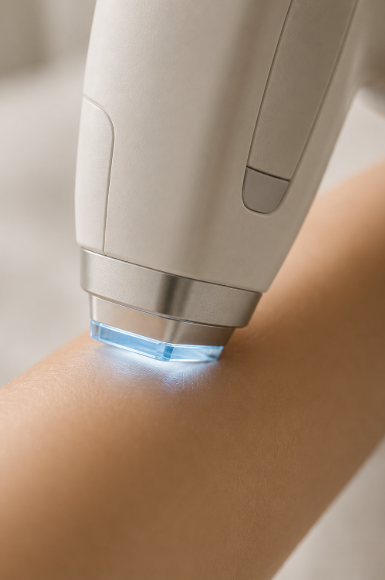
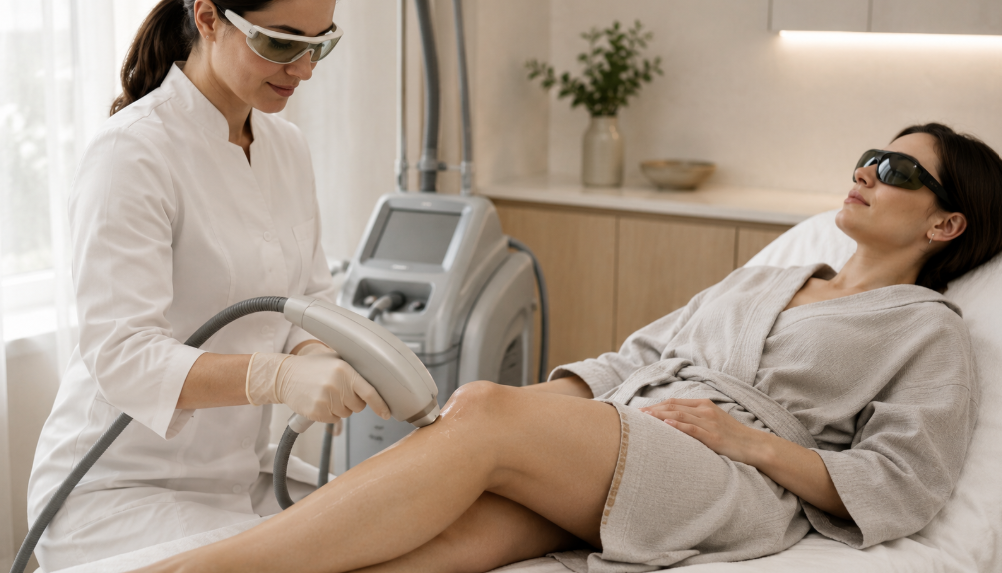
Your session opens with a brief consultation and a settings check matched to your skin tone and hair type. Protective eyewear goes on, then the handpiece is passed over the area in overlapping sections while its cooling tip chills the skin with each pulse. Most people describe each pulse as a quick snap of heat. Small areas like the upper lip or underarms take only minutes; full legs or a back take longer. No anesthesia is needed, and there’s no recovery period afterward.
After
Expect mild redness and a warm, slightly sunburned feeling for a few hours, though most people return to their normal day immediately. Skip hot tubs, saunas, intense workouts, and direct sun for about 48 hours, and apply sunscreen to treated areas, since post-treatment skin is more photosensitive. Over the next one to three weeks, treated hairs will appear to grow out and then shed on their own. That shedding is the desired outcome, not regrowth.
How does Laser Hair Removal compare to waxing, shaving, and electrolysis?
Shaving costs almost nothing per session and takes seconds, but it’s endless, and it brings ingrown hairs and razor burn along with it. It removes hair at the surface and changes nothing below it.
Waxing buys you a few weeks by pulling hair from the root, but the root survives and regrows. It hurts, it requires letting hair grow out to a usable length between appointments, and it carries a real risk of ingrown hairs and folliculitis. Over years, the accumulated cost and time are substantial.
Electrolysis is the one method that qualifies as true permanent removal, and it works on hair of any color, including white and gray. The tradeoff is that it treats one follicle at a time with a fine probe, making it slow and impractical for large areas like legs or backs. It remains the better choice for light-colored hair.
Laser sits in between: far faster than electrolysis, far more durable than waxing or shaving, and effective across large areas in a single session. For pigmented hair, it’s usually the most sensible balance of time, comfort, and lasting result.
What does it cost of Laser Hair Removal?
Pricing depends on the size of the treatment area, the number of sessions in your plan, and whether you’re purchasing sessions individually or as a package. A small area like the upper lip sits at one end of the range; full legs or a full back sit at the other.
The more useful way to think about cost is over time. Waxing and shaving are recurring expenses with no endpoint — you pay for them every few weeks, indefinitely. Laser is a front-loaded investment in a defined series, after which most people’s ongoing spending drops close to zero. Run that math over five or ten years and the comparison usually looks quite different than it does at the first quote. We break down pricing factors and that long-term comparison in how much does laser hair removal cost?

Why physician-led treatment matters
Laser hair removal is often marketed as a routine spa service, but it involves delivering medical-grade energy into your skin. The outcome depends almost entirely on matching device settings to your individual skin type, hair characteristics, and medical history — and on recognizing when someone shouldn’t be treated at all.
At SAS Aesthetic Institute in Mokena, treatments are performed under the direction of Michael S. Romberg, MD, FACS, using FDA-cleared Diode laser technology. Every plan starts with a consultation covering your goals, skin type, hair type, and health history before any settings are selected. Many patients also combine hair removal with skin rejuvenation or body contouring for a more complete result.
We serve patients throughout Mokena, Frankfort, Orland Park, New Lenox, and Tinley Park. You can see the full treatment details, areas covered, and consultation process on our laser hair removal page, or call (708) 476-8205 to schedule.
Frequently asked questions

Michael S. Romberg, MD
Dr. Michael S. Romberg is a Board Certified General Surgeon with more than 32 years of experience. His medical expertise includes general and oncologic surgery, wound care, burn care, lymphedema care, and Hyperbaric Oxygen Therapy. He is also an experienced national and international speaker for healthcare professionals and patients.